Tag Archive: religion


Applying The Attributes Of Jesus Our Table Of Showbread

In our previous posting we presented the correlation between the attributes of the Table of Showbread and the words and actions of Christ Jesus.

To summarize, the bread placed on the Table of Showbread represented the twelve tribes of Israel, and symbolically represented an offering of God’s people to God. The bread on the table suggested an intimate relationship with God, one in which the people would commune with God just as they did with their family over a meal. The Showbread would be displayed for seven days after which it would be replaced with fresh loaves. The removed bread would then be eaten by the priests who perceived it to be spiritual food.

We then correlated the above attributes of the Table of Showbread to the words and actions of Jesus. We used Jesus’ statement, “I Am the Bread of Life” as a key connection to the Table of Showbread. We then introduced the scriptures of the multiplication of the loaves and fish as a validation to His claim to be the Bread of Life. Next we introduced the scripture in which Jesus proclaimed that anyone who ate the Bread of Life would live forever. This statement was later validated when Jesus was raised from the dead and ascended into heaven. Therefore, the Bread of Life has the power to overcome death and live with God forever. Consequently, is it certainly a spiritual food, just like the loaves eaten by the Tabernacle priests were.

Applying the Principles of Jesus the Bread of Life

In the Lords prayer, it states that the Lord’s will be done, on earth as it is in heaven[i]. Therefore, lets do as our Lord Jesus has commanded us to do by eating His body and drinking His blood symbolically by partaking in the bread and wine as they did at the last supper.

And He took bread, gave thanks and broke it, and gave it to them, saying, “This is My body which is given for you; do this in remembrance of Me.” (Luke 22:19)

We should honor Jesus by doing as He requested in remembrance of Him. We should take His real body and real blood in the communion as He prescribed, eating the bread and drinking the wine of the new covenant, knowing that we are eating spiritual food, and knowing that we are taking Jesus into ourselves in the process.

More that this however, through this physical act we must seek to develop the spiritual body and blood of Jesus in ourselves. This is because our spiritual body needs both nutrition and exercise to properly develop, just as our physical bodies do. We can accomplish this by reading the words of Jesus, and making them a part of us. We can then use His words by asking the Holy Sprit to make them live in our hearts, so that the Word of God becomes a part of us. By doing this we will have achieved the communion with the Lord that was prophesized at the Table of Showbread. The body and blood of Jesus will have set us free[ii] and shown us the “Way” to God, the “Truth” about God and the path to “Life” with God forevermore. Lets us therefore seek Him will all of our heart, with all of our soul, with all of our mind, with all of our strength, and with all that we are.

In doing these things we come to Jesus, the Truth, who sets us free from the bondage of our sinful ways. Our journey through the Truth brings change into our lives:

till we all come to the unity of the faith and of the knowledge of the Son of God, to a perfect man, to the measure of the stature of the fullness of Christ; that we should no longer be children, tossed to and fro and carried about with every wind of doctrine, by the trickery of men, in the cunning craftiness of deceitful plotting, but, speaking the truth in love, may grow up in all things into Him who is the head; Christ; from whom the whole body, joined and knit together by what every joint supplies, according to the effective working by which every part does its share, causes growth of the body for the edifying of itself in love. This I say, therefore, and testify in the Lord, that you should no longer walk as the rest of the Gentiles walk, in the futility of their mind, having their understanding darkened, being alienated from the life of God, because of the ignorance that is in them, because of the blindness of their heart; who, being past feeling, have given themselves over to lewdness, to work all uncleanness with greediness. But you have not so learned Christ, if indeed you have heard Him and have been taught by Him, as the truth is in Jesus: that you put off, concerning your former conduct, the old man which grows corrupt according to the deceitful lusts, and be renewed in the spirit of your mind, and that you put on the new man which was created according to God, in true righteousness and holiness. Therefore, putting away lying, “Let each one of you speak truth with his neighbor, for we are members of one another. Be angry, and do not sin: do not let the sun go down on your wrath, nor give place to the devil. Let him who stole steal no longer, but rather let him labor, working with his hands what is good, that he may have something to give him who has need. Let no corrupt word proceed out of your mouth, but what is good for necessary edification, that it may impart grace to the hearers. And do not grieve the Holy Spirit of God, by whom you were sealed for the day of redemption. Let all bitterness, wrath, anger, clamor, and evil speaking be put away from you, with all malice. And be kind to one another, tenderhearted, forgiving one another, just as God in Christ forgave you. Therefore be imitators of God as dear children.” (Ephesians 4:13, 5-1)

So, we as imitators of God seek to become more like Jesus who is the Bread of Life, our Table of Showbread, in the following ways:

Eat the Body and Blood of Jesus

Eat the body and blood of Jesus in the way that our Lord prescribed at the last supper. Remember that His body is food indeed and His blood is blood in deed. Also eat the body and blood of Jesus spiritually, by absorbing the scriptures about Jesus into you heart.

Seek a Spiritual Relationship with Jesus

Seek Jesus in your prayer time and He will be manifest to you through the presence of the Holy Spirit. The Holy Spirit will enlighten you in all things so take the time to listen for His voice. Also remember to listen for the Lord’s voice and His knocking at your door.

Behold, I stand at the door and knock. If anyone hears My voice and opens the door, I will come in to him and dine with him, and he with Me. (Revelation 3:20)

It is only when we open the door called “The Truth” that we can honestly eat the Bread of Life.

Become the Bread of Life for Others

As we eat the Bread of Life and grow in the Lord we will be led to say and do the things that Jesus did. As our overall behavior changes, others will be able to see the goodness of Life that is in us. By the power of the Holy Spirit the intent of the Father will come through us and be deposited in others around us. We therefore are agents of Jesus who are carrying on His mission until His return at the second coming.

In our next post we will introduce the Golden Lampstand. If you have any questions please make a comment. I look forward to hearing from you.

May the peace of our Lord Jesus Christ be will all of you.

Joe Gordon


[i] Matthew6:9-11 In this manner, therefore, pray: Our Father in heaven, Hallowed be Your name. Your kingdom come. Your will be done On earth as it is in heaven. Give us this day our daily bread.

[ii] John 8:35 And a slave does not abide in the house forever, but a son abides forever. “Therefore if the Son makes you free, you shall be free indeed.


Jesus The Table Of Showbread

In our last few post we introduced the Holy Place of the Tabernacle and proclaimed that it is prophetic of Christ Jesus. Today we are going to investigate one of the objects found in the Holy Place, namely the Table of Showbread. We are going to look at the attributes and functionality of this Tabernacle object and then compare them to the attributes and functionality demonstrated in the life of Jesus. By making these comparisons we hope to demonstrate that Jesus is our Table of Showbread. In addition, we hope that each of you will gain a better understanding of who Jesus is, so that we may be able to better imitate our Lord and Savior.

Showbread means, “Bread of face” as it was to be continually presented before God as a meal offering from the twelve tribes of Israel. The table is made of pure gold and is covered by a blue cloth upon which the loaves rested. In addition, the bread is arrayed on the top of the table in the form of two rows of six loves, each loaf representing one of the tribes of Israel. Each of the loaves is also covered with Frankincense, which was considered a precious perfume.

God did not eat the bread but rather, it remained before the Lord (or shown) for one week. On each Sabbath the priests would replace the loves with fresh ones. Once removed, the bread would be eaten by the priests and their families who perceived it to be spiritual food.

The table of Showbread is symbolic of man communing with God in a way that is similar to the way that a family communes over the dinner table. It therefore represents the establishment of a close and personal relationship with the Father. In addition, the bread is also symbolic of Gods provision, of which we are forever grateful.

In the following sections, we will proceed to make the scriptural correlations between Jesus and the Table of Showbread. We will demonstrate that the Table of Showbread prophetically points to Jesus as the Christ. We plan to demonstrate that He is our Bread of Life, our daily provision of whom we are forever grateful.

Jesus is The Bread of Life

Support for the proposition that Jesus is the Table of Showbread can be found by examining the statements and actions of His life. In the following scripture Jesus proclaimed to be the Bread of Life which is a parallel to the loaves of showbread. This proclamation is then followed with supporting signs and miracles that reinforce His statement. These signs and miracles do not simply display the power and mercy of God, but rather directly support Jesus’ claim to be the Bread of Life. The following passage taken from the book of John captures Jesus proclamation of being the Bread of Life:

Therefore they said to Him, “What sign will You perform then, that we may see it and believe You? What work will You do? Our fathers ate the manna in the desert; as it is written, ‘He gave them bread from heaven to eat.” Then Jesus said to them, “Most assuredly, I say to you, Moses did not give you the bread from heaven, but My Father gives you the true bread from heaven. For the bread of God is He who comes down from heaven and gives life to the world.” Then they said to Him, “Lord, give us this bread always.” and Jesus said to them, “I am the bread of life. He who comes to Me shall never hunger, and he who believes in Me shall never thirst.” (John 6:30-35)

In this statement Jesus claims that He is everything necessary to sustain life for those who come to Him. Shortly after His proclamations signs and miracles followed. Examine the following scripture for an example:

Jesus said to them, “How many loaves do you have?” And they said, “Seven, and a few little fish.” So He commanded the multitude to sit down on the ground. And He took the seven loaves and the fish and gave thanks, broke them and gave them to His disciples; and the disciples gave to the multitude. So they all ate and were filled, and they took up seven large baskets full of the fragments that were left. Now those who ate were four thousand men, besides women and children. (Matthew 15:34-38)

This miracle substantiates Jesus’ claim of being the Bread of Life. Those who came to Him that day did not hunger or thirst. Jesus demonstrated that He is the Bread of Life by feeding the multitude with vastly insufficient resources. The power of God reinforced Jesus’ claim precisely.

Here is another example: Jesus is the living Table of Showbread that came from heaven to earth. If we eat of Him who is the Bread of Life we will live forever:

Whoever eats My flesh and drinks My blood has eternal life, and I will raise him up at the last day For My flesh is food indeed, and My blood is drink indeed. He who eats My flesh and drinks My blood abides in Me, and I in him. As the living Father sent Me, and I live because of the Father, so he who feeds on Me will live because of Me. This is the bread which came down from heaven; not as your fathers ate the manna, and are dead. He who eats this bread will live forever. (John 6:54-58)

Some say that we are what we eat. By eating the Bread of Life we become the bread of life for others, just like Jesus did for us. We eat the Bread of Life by reading the Word of God, and in doing so we take Jesus into ourselves. In this way we become more like Him. We also eat the Bread of Life when we partake in the communion sacrament as Jesus commanded us to do in remembrance of Him.

Of course Jesus’ claim that we should eat His flesh is a spiritual statement proclaiming everlasting life by becoming one with Him in the sprit. Think about the story of how God created the world. God spoke, his Word went out, and His Word accomplished God’s desire. Here is a passage from Genesis that proves the point:

Then God said, “Let there be light”; and there was light. (Genesis 1:3)

The same principle is true of the words spoken by Jesus. After all, Jesus only spoke about the things that He saw and herd from the Father. So, it works the same way in our example. Jesus spoke the words the Father gave Him and those things came to pass. Jesus said He was the Bread of Life and His spoken Word accomplished God’s desire. In this case it was manifest in the feeding of the multitude and communicating His own identity.

Jesus is the Bread of Life. This statement is true both physically and spiritually. It is true that we who come to Jesus will not hunger or thirst in the flesh. It is also true that Jesus is the spiritual Bread of Life and those who follow Him will not hunger or thirst in the spirit but will have life everlasting. We eat the Bread of Life when we read about Jesus’ words and actions in scripture. When we read the words that He spoke we are literally taking the Bread of Life into ourselves and it becomes a part of us. When we receive the words that Jesus spoke they accomplish their desire in us. We eat the Bread of Life and we become what we eat. God’s Word is planted in us and we begin to fulfill God’s purpose for our lives. The more we take into ourselves, the words of the Father and the Son by the power of the Holy Spirit, the more we are transformed into God’s purpose for our lives.

Once this has transpired, we obtain the ability to speak God’s Word into the lives of others. We speak to others of what God has placed into our hearts by way of the Holy Spirit. We speak the things that we hear Him speak and we do the things that we see Him do, and in the process, others come to eat the bread of life also. They take the Bread of Life from us and integrated it into themselves, and God’s Word is achieved in them.

Jesus left all things in our hands until His return. He said the things that I do, my followers will also do, and even greater that these things will they do. We become the Way and the Truth through our actions and words.

In our next posting we will look at the ways in which we can become the bread of life to others. If you have any comments I would love to hear from you. Until next time, may the love of God be with you.


Read my amazing true life story about how the forces of good and evil battle for my life and the vision that God has given me. My book, “Possess the Vision,” communicates my supernatural experiences and as a result, provides insight into the realm of the spiritual warfare that is raging for our souls and our purpose. This is a must read for all Christians. Learn more by following this link: Possess-the-Vision-at-Amazon

Entering The Truth Of The Tabernacle

The Tabernacle Courtyard

The Tabernacle Courtyard


In our previous postings we have communicated how the Tabernacle Courtyard is prophetic of Jesus Christ. The Courtyard foretells the blood sacrifice required of Jesus as payment for our sins on the cross. It also communicates that we must look at ourselves in light of the prefect model of Jesus. We must compare our actions and words to His since He is the Son of God and led a perfect life. In doing these things we enter into a relationship of grace with God. This fundamental relationship with God prepares us for a closer and more intimate relationship with Him. It prepares us for a relationship of empowerment, which is presented below in the section entitled “Jesus is the Truth.”


The Tabernacle Courtyard

The Tabernacle Courtyard


Our immediate objective is to present a review of the material that covers the Tabernacle as it pertains to the prophesy of Jesus Christ. We start with one of the most famous statements of Jesus, “I am the Way, the Truth and the Life.”  

The Way the Truth and the Life


The foundation for all of the work we will present on this subject is based upon the, “I am the Way, the Truth and the Life,” statement made by Jesus. What we have discovered is that these names, (the way, the truth and the life), are the names used to identify the entry ways into the Tabernacle chambers. “The Way,” for example is the name of the gate that leads into the Tabernacle Courtyard. “The Truth” is the name of the door into the Holy Place, and in like manner, “the Life,” is the passage into the Most Holy place of God. For a more detailed explanation of all of this please follow this link Jesus-is-the-Way-the-Truth-and-the-Life.


The Tabernacle Gate

The Tabernacle Gate


Another part of the work covered to date is that the Tabernacle is the place where God promised to dwell with His people in accordance with the covenant He made with them. Given that the chambers of the Tabernacle must be entered in sequence, what we have uncovered is that a progressively closer relationship with God is achieved as each new chamber is entered. So for example, the Tabernacle Courtyard is the chamber where a relationship of grace (forgiveness of sin) is achieved. The Holy Place brings us to a relationship of enlightenment (purpose and path) and empowerment (spiritual warfare), while the Most Holy place offers a relationship of covenant (dwelling under the protection of God).


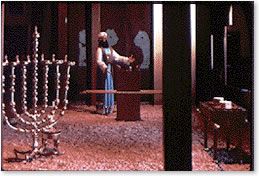
Priest in the Holy Place of the Tabernacle

Priest in the Holy Place of the Tabernacle


To date our investigation of the Tabernacle has been limited to looking at the Courtyard, the first of the three chambers of the Tabernacle. As a part of this investigation we have presented the objects found in the Courtyard, identified their purpose and attributes and then correlated them to the words and deeds of Jesus. So, for example, we found that grace is achieved in the Courtyard by way of blood sacrifice, in which a Lamb is slaughtered and then burned on the Brazen Alter (see details at Jesus-the-Brazen-Laver.) We can then associate Jesus, the “Lamb of God,” to this object by correlating it to the sacrifice and death of Jesus on the cross. This sacrifice of Jesus was required for the forgiveness of our sins. We conclude form all of this that Jesus is the fulfillment of the Brazen Altars prophesy and the entire Courtyard of the Tabernacle for that matter. This association between Jesus and the Tabernacle Courtyard should also help us to better understand what Jesus meant when He said “I am The Way.” Jesus meant that He is the way toward a relationship of grace. For more information about this please click on the following links to Jesus-is-the-Way and Becoming-like-Jesus-the-Way.


Jesus on the Cross

Jesus on the Cross


Our investigation of the Courtyard is also presented an examination of the Brazen Laver, which is the other object found in the Tabernacle Courtyard (for more details go to Jesus-the-Brazen-Laver.) The Laver is a water basin used for purification prior to entering the next chamber (the Holy Place), which represented a much closer relationship with God. The process of washing at the Laver required the priest to bend over it and as he did, he would be able to see his own reflection in its polished surface. The priests believed that when they looked into the Laver, that they saw themselves as God saw them. As a result their hidden faults were uncovered and they earnestly contemplated their worthiness to enter into a closer relationship with God in the Holy Place. This reflection resulted in a change in heart, which is necessary to enter into the Holy Place.


The Brazen Laver In Front Of The Holy Place


We then connected the function and attributes of the Laver with the life and words of Jesus. We used the baptism of Jesus in the Jordan as a fulfillment of prophesy of the Laver (for more information go to the-Laver-and-the-Holy-Spirit-of-Jesus.) We also saw how the washing of His disciple’s feet became a reflection of their readiness to enter into His ministry. In general we conclude that all of the words and deeds of Jesus are occasions for reflection and opportunities for change in preparation for ministry. Therefore our reading of scriptures that contain the words and deeds of Jesus are opportunities for reflection about our nature and how we stack up to in comparison to Jesus, our model of perfection. These occasions are opportunities to conform our heart and mind to Him as we pursue a more intimate relationship with God. For more detailed information about this click on the following link Applying-the-attributes-of-Jesus-our-Laver. 


So, by passing through “the Way” and into the Tabernacle Courtyard we find that our sins are forgiven and that our nature is changed as we seek to move into a deeper relationship with the Lord in the Holy Place. In a like manner we find that by passing through Jesus that our sins are forgiven and our nature is changed as we read His word and seek to become like Him. When this metamorphosis is complete we become ready to move to the next level by entering the passageway called “The Truth.”


The Truth leads us into the Holy Place of God where our pathway with the Lord is enlightened, our relationship with the Father is established and we become empowered for spiritual warfare. We are ready to provide a deeper assessment of, “Jesus the Truth.”  

Jesus is “The Truth”


We are now about to pass through the second door of the Tabernacle, the one called “the Truth”, that leads us into the Holy Place of God. To see a diagram of the Tabernacle chambers we encourage you to go to the following web page now and then return once you have viewed it (or open it in a separate browser so that you can read along while also looking at the picture): 


Diagram of the Tabernacle, Basic Layout of the Moses tabernacle  


In order to get a big picture view of where we are headed in the over all scheme of things we start with a review: 


When we look into the structure of the Tabernacle (like in the diagram above) we find that it has three major chambers. As we pass through the door of each successive chamber we find that God is presenting us with an expanded, more intimate relationship with Him.  


We have already discussed the Way and the Courtyard above. We have identified that it presents us with a relationship of grace and is a place of reflection and change. When Jesus claimed to be the Way, He is claiming to be the door that we must pass through to achieve to a relationship of grace.  


Our presentation of, “Jesus the Truth,” address the Holy Place of the Tabernacle and we plan to demonstrate that it is a place to achieve a relationship of empowerment. The passageway to the Holy Place is called “the Truth,” and so when Jesus claims to be “the Truth,” He is claiming to be the passageway to a relationship of empowerment.  


In subsequent postings we will plan to present the Most Holy place and in doing so, we plan to present a case that proves that a relationship of covenant is possible for us there. The veil to the Most Holy place is called “the Life”, so when Jesus claims to be the Life, He is claiming to be the veil to the Most Holy Place and a relationship of covenant with God.


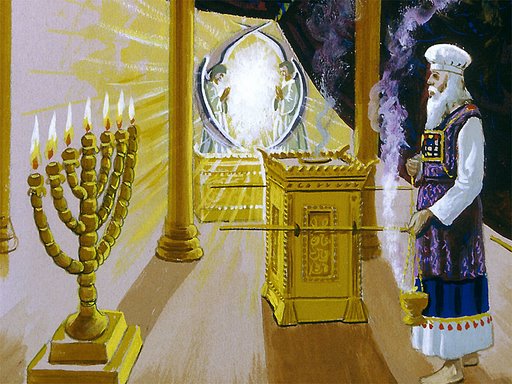
The Priest in the Most Holy Place of the Tabernacle

The Priest in the Most Holy Place of the Tabernacle


The relationship between the Tabernacle and Jesus is that Jesus claimed to be “the Way, the Truth and the Life” and the doors of the Tabernacle chambers are called, “the way, the truth and the life.” Therefore, if Jesus is the Christ, we will find the same attributes and functions in the life of Jesus as we do in the Tabernacle. We will find that understanding the Tabernacle will also help us to better understand the nature of Jesus such that we can better emulate His life. All of this will help us to move into a closer relationship with God and do the work that He gave us to do on this earth. So, with this brief review in place let up proceed by looking at the physical properties of the Holy Place of the Tabernacle. 

Describing the Holy Place


The Holy Place is found inside the sanctuary tent that is found in the center of the Courtyard. The door to the tent is a curtain that is called, “The Truth.” By passing through the Truth one enters a room called, “The Holy Place.”  


Prior to entering into the Holy Place it is necessary to first pass through the Courtyard and the Way (reference the diagram). The reason for this is that purity must be achieved prior to entering into ministry in God’s Holy place. Entry into the Holy Place is the exclusive privilege of the priest, as no others are allowed inside. Therefore, God expects our purity to be achieved in the Courtyard. Our sins must be forgiven and our sinful nature addressed.  


Like the other compartments of the Tabernacle, the sanctuary was designed by God who passed the specifications directly to His servant Moses:  


And let them make Me a sanctuary, that I may dwell among them. According to all that I show you, that is, the pattern of the tabernacle and the pattern of all its furnishings, just so you shall make it. (Exodus 25:8-9)


As a result the sanctuary is both very practical and at the same time, very prophetic of the coming Christ.  


The Holy Place uses the east 30 feet of the sanctuary tent and contains three significant objects. It contains the Table of Showbread on the north side;

The Table of Showbread

The Table of Showbread

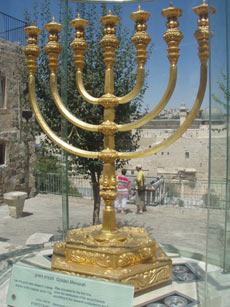
the Golden Lampstand on the south side;

The Golden Lampstand which was present in old temple but damaged, was restored to its original form, kept outside the temple area.

The Golden Lampstand which was present in old temple but damaged, was restored to its original form, kept outside the temple area.

and the Altar of Incense on the west side.

The Golden Altar is directly in front of the Most Holy Place

The Golden Altar is directly in front of the Most Holy Place

It should also be noted that the Golden Altar of Incense is placed directly in front of the vale (entrance) to the Most Holy Place. From this location a priest ministering at the Golden Altar can view the Ark of the Covenant and the Mercy Seat by simply looking through the semi-transparent vale. We will cover all of this later when we present the section called The Life. For now we will proceed to address the objects found in the Holy Place. 


One major difference between the objects found in the Holy Place and Courtyard is that all the objects in the Holy place are made of gold, while all the objects in the Courtyard are made of brass. This is significant because one who stands in the Holy Place is in a more favored relationship with God than one who is in the Courtyard. The gold used in the Holy Place signifies the special presence of God. When we look at the uses of the word “gold” in the bible we find that gold was used to symbolize God’s Word, the wisdom of God, the knowledge that emanates from God, the living favor of God, and truth. All of these attributes are to be associated with the Holy Place and with Christ Jesus as well. 

Our next posting will address the details of the Table of Showbread, the Golden Lampstand and the Alter of Burnt Offerings.

Read my amazing true life story about how the forces of good and evil battle for my life and the vision that God has given me. My book, “Possess the Vision,” communicates my supernatural experiences and as a result, provides insight into the realm of the spiritual warfare that is raging for our souls and our purpose. This is a must read for all Christians. Learn more by following this link: Possess-the-Vision-at-Amazon


Read my amazing true life story about how the forces of good and evil battle for my life and the vision that God has given me. My book, “Possess the Vision,” communicates my supernatural experiences and as a result, provides insight into the realm of the spiritual warfare that is raging for our souls and our purpose. This is a must read for all Christians. Learn more by following this link: Possess-the-Vision-at-Amazon

Applying The Attributes Of Jesus Our Laver


So, based on our previous postings regarding the Laver, we have uncovered a number of key attributes of Christ Jesus. Our intention is to use them as the model of perfection that we are called to become. As we progress in this section, we plan on using these key attributes to help us better understand how our own actions and decisions compare to the pure light of Jesus’ life, hoping that they will reveal our hidden faults. As with any scripture that teaches us about Jesus, we have the opportunity to meditate on these stories and ask the Holy Spirit to enlighten us to the truth. When we find similar circumstances in our own life we should ask ourselves, “What actions did I take (or not take) and what needs to change for me to be more like Jesus?”

As mentioned in our previous posts, cleansing at the Brazen Laver was a prerequisite for entering into the Holy place of God. In addition, the Holy place of God is a place of enlightenment, relationship with the Father and success in spiritual warfare. Therefore, it is necessary for us to focus on Jesus our Laver, for the purification necessary achieve a closer relationship with God. A loving relationship that will enlighten our pathway and empower us in the ministry He has chosen for us. This purification can come only through Christ Jesus because He is the one living Tabernacle that came down from heaven[i].


In our last posting we spent quite a bit of time looking at the scripture of Jesus washing the feet of His disciples. It may be a good idea to review this posting prior to proceeding as it is referenced substantially in this document.


So now we can proceed with our list of the attributes of Jesus that have been introduced in our section entitled “Jesus the Brazen Laver”. I hope that you will be able to use this list to better understand who Jesus is, so that you can apply the model of Jesus the Laver to your life.


Be Of Service To Others


One of the strongest messages from the material presented so far is that disciples must possess a servant’s heart and that true greatness comes only from serving others in ministry. This message was forgotten by Jesus’ disciples, who had been contending with each other over who would be the greatest after Jesus was gone. Apparently, Jesus’ prior teaching on service to others had not changed their hearts or their behavior. It is for this reason that Jesus had to address this flaw with them again. The following scripture is Jesus’ teaching on the subject:


But they kept silent, for on the road they had disputed among themselves who would be the greatest. And He sat down, called the twelve, and said to them, “If anyone desires to be first, he shall be last of all and servant of all.” (Mark 9:34-35)

Do What Ever It Takes

A second key point is to do whatever it takes to get the message across. In the case of Jesus washing the feet of His disciples, Jesus gets their attention by performing an activity (the washing of feet) that was assigned to the lowest of servants in their culture[ii]. The message here is to disregard social norms concerning status in society when serving God. With Jesus, God leveled the social status playing field.

Lead By Example

Another teaching is to do more than just preach the Word, but rather, lead by example in the things that the word instructs as well[iii]. Jesus spoke to His disciples about who would be the greatest with no apparent effect. Therefore, it took a personal demonstration to drive home the point (in washing their feet). His disciples must have been humbled by how radically He lowered Himself to serve them. They must have been personally touched as He personally ministered to each and every one of them. Just think about what they must have been thinking while He washed their feet. They would have had to realize at that moment, just how far they had fallen short of the will of God in their behavior. The message from Jesus is clear, He did not come to be served but to serve83, and He wants His disciples to do the same. His actions demonstrated the will of God. He spoke the truth and He did what He told others He would do. He came to serve others, which was exemplified not only in the washing of feet but in His ultimate sacrifice on the cross as well.

Become A Model For Others

Jesus was a model for His disciples and for each and every one of us as well. Should we not be the same for others as well? This means that our lives are to be a Godly example for others. The things we do and say must demonstrate the love of Jesus to others. We cannot hide our God given light under a basket, but rather place it in the center of the house where all can see, as adequately communicated by Jesus in the following passage:


Nor do they light a lamp and put it under a basket, but on a lamp stand, and it gives light to all who are in the house. Let your light so shine before men, that they may see your good works and glorify your Father in heaven. (Matthew 5:15 – 16)

Be Careful With Whom You Walk In Ministry


My belief is that one of the reasons that Jesus washed the feet of the disciples could have been that they had walked in ministry with Judas who betrayed Jesus. In washing their feet they were once again cleansed for the ministry of Christ Jesus.

Also note that Jesus did not join the ministries of the Pharisees, Sadducees or any other sect of their religion. He knew that they loved the status and power that their positions brought much more than they loved doing the will of God. One must consider that if evil had entered into the leadership positions of the church during the time of Jesus, then why would we believe that it cannot happen today? It is precisely for this reason that we must seek to have an even closer relationship with God than can be achieved in the Outer Courtyard of the Tabernacle (relationship of grace) alone. We must move into the Holy Place of God (relationship of empowerment) where our pathway will be illuminated, we eat the Bread of Life and we will enter into spiritual warfare to defeat the enemies of God and of our ministry. All of this starts with cleansing at the Brazen Alter that is life of Jesus. We must have discernment about others that we walk with in ministry.

Disregard Status, Rank And Position


Peter did not want Jesus to wash His feet because he believed that it was beneath the dignity of His Lord and Savior to perform the task of the lowest of slaves. But this is precisely the reason that the message was delivered! Jesus is teaching them that they should disregard status, rank and position in service to one another. These things are things of the world and unimportant in the kingdom of God. Therefore, the leader of a ministry is a servant to the workers and followers of that ministry. A Pastor is a servant to the congregation. An evangelist is a servant to the newly converted to Christ. A teacher of God’s Word is a servant to the pupils who seek to do the will of God. And, while each of these positions come with some level of status or rank in the world, the true Christian abandons rank, status and position in favor of service in ministry to others. We all should serve our brothers and sisters in the Lord. This means that if we are members of a ministry that we also need to serve our pastors and ministers that God has given to us as they in turn serve us. In addition, we need to do all things as a service unto the Lord:


…and said to them, “Whoever receives this little child in My name receives Me; and whoever receives Me receives Him who sent Me. For he who is least among you all will be great.” (Luke 9:48)

Personally Touch People


In washing His disciple’s feet, Jesus touched each disciple. In fact, the disciples were being touched continuously by the teaching and demonstration of spiritual truth in the ministry of Jesus. They were with Him constantly as He ministered to others. They listened as He taught others, and they witnessed the miracles He performed. In addition, they received the benefit of His personal explanations, teachings, and warnings regarding the Scribes and the Pharisees. They witnessed Jesus’ special relationship with the Father in the Transfiguration on the mountain and in the ascension of Jesus into Heaven. The disciples had to be touched by these events as they witnessed the glory of God demonstrated on earth.


The Bible asks us to follow in Jesus’ foot steps. We must touch people personally. Not just in the laying on of hands, but in stepping out in faith and expecting to witness the glory of God demonstrated by the power of the Holy Spirit right here on earth. There should be healing of the sick, the resurrection of the dead, miraculous provisions for the poor, and miracles of all kinds demonstrated for all to see God’s love for His people. God’s heartfelt desire is to wipe away every tear and provide every good thing for His people. After all, the Father gave His own Son. Why would He spare anything else from those who love Him130?

Be Humble


Jesus used His own life as an ideal demonstration of how we are to act. Jesus did not have a home. He did not build a church of stone. He did not study as a Scribe or Pharisee but, rather, challenged the religious leaders of His day with the truth. In doing so, He was subjected to their scorn and the persecution that followed.

Jesus asked those who were healed not to identify Him as their healer. He did not come to brag about what He could do. His concern was for the people.

Be ready and willing to take on any task you are led toward by the power of the Holy Spirit. Disregard how you will appear to others, what they may think or even your own level of dignity. God wants to see how much you are willing to give up of this world to do His will. He wants to see how much you love Him.

Eliminate Worldly Desires

Jesus had a desire for us to know the truth and spiritually return to the loving arms of the Father. He had no desire for anything of this earth. He had no desire for honor, dignity, riches or glory. He only did the things that He saw the Father do62. Therefore, we also must eliminate all desire for worldly honor, dignity, riches and glory. The disciples contended with each other over who got the most glory and honor. This type of behavior, if left unchecked, could have destroyed the foundation of the church. It is the same principle today as it was 2000 years ago. Disagreement between the leaders of a ministry can destroy the foundation of that ministry. Keep your eyes on Jesus. Seek Him with all of your heart, mind and soul.

Eliminate Self-Exaltation


Self-exaltation is a specific demonstration of worldly desire and is an indication of our old nature to seek worldly gratification. This human tendency means that we should examine our motives for doing everything. We must continuously ask ourselves; am I doing this for myself, or am I doing this for the Lord? Am I looking for power, control or recognition by taking these actions? Self-exaltation has no place among Christians. We must eliminate it from our behavior. We must avoid the spirit of domination of others and of seeking personal glory.

Be Baptized In Watter And Spirit


John baptized in water to make straight the pathway[iv] for the Lord’s ministry. Jesus was also baptized in water, and as a result received the baptism of the Holy Spirit in the process. The disciples of Jesus baptized others as a part of their ministry. In addition, Jesus commanded them to baptize others in the grand commission. Be baptized and repent of your sins. Seek the baptism of the Holy Spirit and make the baptism of others a part of you ministry.

Know That You Will Be Tested


Immediately after receiving the baptism of the Holy Spirit, Jesus was led into the wilderness and tested by Satan for forty days. Satan tempted Jesus with everything that he had in an effort to get Him to deny his purpose and his ministry. In denying the temptations of Satan, Jesus proved that He was a worthy of ministry. He defeated Satan by resisting all of the temptations of this world and remaining true to His Father’s mission for Him. He successfully resisted the temptations of the flesh, of power, of riches and fame. He chose the path of the Spirit of God in favor of the path of the spirit of this world.

Know The Scriptures


Get an understanding of what Jesus did, what He valued, what He said, what He prophesied, and who He proclaimed Himself to be. Memorize the words of Jesus that you find uplifting. Ask the Holy Spirit to help you understand the scriptures so that Jesus is revealed to you.

Take Time To Meditate And Reflect

Reflect on the state of your heart and your life. Bring to mind the actions and words of Jesus and ask how does this compare to the actions of my own life? How could I have done things differently?

Ask The Holy Spirit For Help

We need God’s help to achieve the kind of change we are looking for. We simply cannot achieve this kind of change on our own. Seek the Holy Spirit and bring the issues you are dealing with to Him. Pray for positive change in the name of Jesus.

Jesus the Model of What We Can Become

It is at the laver where we take the time necessary to reflect upon our shortcomings and the things that we must do to become more like our Savior. One thing is certain and it is that we are not likely to achieve the perfection that Jesus did on this earth, and yet, the reality is that God wants us to become like Him[v]. As we follow the lead of the Holy Spirit, and choose to change at His leading, we become more like Jesus, one step at a time. Slowly we are transformed back toward the image and likeness of God, knowing that one day we will be united with Jesus and shine as brightly as He demonstrated in the transfiguration. Here is the truth according to Mathew:

Now after six days Jesus took Peter, James, and John his brother, led them up on a high mountain by themselves; and He was transfigured before them. His face shone like the sun, and His clothes became as white as the light and behold, Moses and Elijah appeared to them, talking with Him. Then Peter answered and said to Jesus, “Lord, it is good for us to be here; if You wish, let us make here three tabernacles: one for You, one for Moses, and one for Elijah.” While he was still speaking, behold, a bright cloud overshadowed them; and suddenly a voice came out of the cloud, saying, “This is My beloved Son, in whom I am well pleased. Hear Him!” And when the disciples heard it, they fell on their faces and were greatly afraid. But Jesus came and touched them and said, “Arise, and do not be afraid.” When they had lifted up their eyes, they saw no one but Jesus only. Now as they came down from the mountain, Jesus commanded them, saying, “Tell the vision to no one until the Son of Man is risen from the dead.” (Matthew 17:1-9)

So, when Jesus claimed to be the Way, He used His own life as example of what we can become. In the example above Jesus gives us a glimpse into the bright and shining spiritual being that we can become. Certainly, the reflection at the Laver calls us to examine the state of our lives in comparison to the perfect model which is Jesus. In addition, we have to ask the question; are we ready to move into a closer and more intimate relationship with God or is there something that is holding us back?

Being able to answer this question requires an in-depth understanding of Jesus, and we often find ourselves studying Bible to get that understanding. In understanding the words and actions of Jesus we are much better prepared to identify our improvement areas. In addition, as in all things, we seek the help of the Holy Spirit in identifying and achieving change. Jesus is, “The Way” to effective change because when we become more like Him, we do the things that He did, we speak the words that He spoke, we conform our heart to His compassion level and we earnestly seek to please the Father in all that we do, just like He did.

Based on the life of Jesus we chose to change to be like Him. We read the scripture like the, “Washing of feet” passage above, and we are convicted in our hearts by our own sad life style. We seek the Holy Spirit to help us change our lives such that we serve other Christians and cast aside any focus we may have on our own importance or self interests. In implementing these changes we move closer to God. We become more like Jesus, the Son of God, continuously seeking to conform to the perfect image of Jesus. After all, we are the Bride of Christ46.

“The Way” Leads to the Courtyard of Grace

“The Way” is a name that is sometimes used for the gate that leads to the Tabernacles Outer Court where a relationship of grace is established with God. It is here in the Outer Court that the Holy Spirit leads us to repentance and compels us to ask for forgiveness of our sins.

We are led to the Outer Court when we become so desperate for help that all we can do is give up and search for God for an answer. We call out to Him and He draws us in. He enables us to reflect upon who we are, how we have failed, and most importantly, how He is the only Way. Eventually, we break down, repent and ask forgiveness.


As we dwell in the Outer Court, we are also persuaded to look at Jesus, His life and His deeds. By looking at Him, we can see in our hidden imperfections in the pure light of God. We are led to reexamine our actions and life choices based upon the purity of His. We are humbled by our discoveries and know that we owe a debit that we cannot pay. Fortunately, the shed blood of Jesus, the Lamb, has already earned our forgiveness and His body has been burned upon the Alter of God in payment. It is in the Outer Court that He took the punishment that we deserved for our sin upon Himself, therein, setting us free from sin. The result is that our nature is changed. Our hearts and minds are conformed to the heart and mind of Jesus.

In the Outer Court we enter into a cycle of reflection, self discovery, repentance and forgiveness that continues until God determines that we are ready to enter into an even closer relationship with Him. A relationship that requires that we pass through the passageway called, “The Truth” and enter into His Holy Place which is the topic of our next major section.


[i] Revelation 21:3 And I heard a loud voice from heaven saying, “Behold, the tabernacle of God is with men, and He will dwell with them, and they shall be His people. God Himself will be with them and be their God.

[ii] Spirit Filled Life Bible, p 1600, note 13-5

[iii] James 1:23 – 24 For if anyone is a hearer of the word and not a doer, he is like a man observing his natural face in a mirror; for he observes himself, goes away, and immediately forgets what kind of man he was.

[iv] John 1:23 He said: “I am ‘The voice of one crying in the wilderness: “Make straight the way of the LORD,” ‘ as the prophet Isaiah said.

[v] Mat 5:48 Therefore you shall be perfect, just as your Father in heaven is perfect.


If you are a new visitor to our site you will find that we are in the midst of a search to understand, find and become more like Jesus. New readers may find it helpful to read or browse the past postings, as there are several instances where current material is build upon prior postings. These postings can be found in the right hand column of the web page, in the box entitled “PAGES”, starting with the topic of “Seeking Jesus”. With that said we will present our current material.


In this section we will look for evidence of Jesus performing the services offered at the Brazen Laver. We will also explore the lessons that we can apply to our own lives that flow from our analysis of this topic.

Jesus Washes the Feet of His Disciples

Jesus, knowing that the Father had given all things into His hands, and that He had come from God and was going to God, rose from supper and laid aside His garments, took a towel and girded Himself. After that, He poured water into a basin and began to wash the disciples’ feet, and to wipe them with the towel with which He was girded. Then He came to Simon Peter. And Peter said to Him, “Lord, are You washing my feet?” Jesus answered and said to him, “What I am doing you do not understand now, but you will know after this.” Peter said to Him, “You shall never wash my feet!” Jesus answered him, “If I do not wash you, you have no part with Me.” Simon Peter said to Him, “Lord, not my feet only, but also my hands and my head!” Jesus said to him, “He who is bathed needs only to wash his feet, but is completely clean”; So when He had washed their feet, taken His garments, and sat down again, He said to them, “Do you know what I have done to you? You call me Teacher and Lord, and you say well, for so I am. If I then, your Lord and Teacher, have washed your feet, you also ought to wash one another’s feet. For I have given you an example, that you should do as I have done to you. Most assuredly, I say to you, a servant is not greater than his master; nor is he who is sent greater than he who sent him. If you know these things, blessed are you if you do them. I do not speak concerning all of you. I know whom I have chosen; but that the Scripture may be fulfilled, ‘He who eats bread with Me has lifted up his heel against Me.’ Now I tell you before it comes, that when it does come to pass, you may believe that I am He. Most assuredly, I say to you, he who receives whomever I send receives Me; and he who receives Me receives Him who sent Me.” (John 13:3-20)

Jesus clearly communicates several key points in washing His disciple’s feet. First of all, He communicates that each disciple should strive for purity in their life and their walk with God. For example, in the above passage Jesus tells Peter, “And you are clean, but not all of you.” For He knew who would betray Him; therefore He said, “You are not all clean.” This is in obvious reference to Judas who allowed the devil to enter the desire to betray Jesus[i] into his heart. The implication here is that the cleansing of Peter’s feet was necessary because he had walked with Judas, the son of perdition[ii], as a brother in ministry.

A lesson to be learned here is to be careful about who we walk with in ministry. If we walk with evil then how can our feet be clean? In addition, this lesson is symbolic of the transformation that the disciples would soon undertake in being baptized by the Holy Spirit. Therefore, the washing of their feet prepared them by washing away this worldly life in preparation for entering a life in the spirit.

In addition, Jesus tells Peter, “If I do not wash you, you have no part with Me.” This is a direct correlation to the purification at the Laver, where it was also a requirement to enter a deeper relationship with God. Secondly, we should model our life after the life of Jesus. In perfecting our walk with God we should look at the life of Jesus as the model of perfection to which we aspire. Reflecting on our own actions and, in turn, comparing them to His actions results in the ability to see ourselves for what we are. If this is the case in our life then we can be expected to wash the feet of those who walk in ministry with Jesus.

Thirdly, the washing of feet is symbolic of the baptism of the Holy Spirit, which in turn, is preparation for the ministry of the priesthood. Jesus was preparing His disciples for priesthood at the Last Supper. His instructions were clear that they were to go and wait for the helper, the Holy Spirit. Here is what happened:

And being assembled together with them, He commanded them not to depart from Jerusalem, but to wait for the Promise of the Father, which, He said, “You have heard from Me; for John truly baptized with water, but you shall be baptized with the Holy Spirit not many days from now.” (Acts 1:4 – 5)

In addition, the following scripture that confirms this prophesy of Jesus:

When the Day of Pentecost had fully come, they were all with one accord in one place. And suddenly there came a sound from heaven, as of a rushing mighty wind, and it filled the whole house where they were sitting. Then there appeared to them divided tongues, as of fire, and one sat upon each of them. And they were all filled with the Holy Spirit and began to speak with other tongues, as the Spirit gave them utterance. And there were dwelling in Jerusalem Jews, devout men, from every nation under heaven. And when this sound occurred, the multitude came together, and was confused, because everyone heard them speak in his own language. Then they were all amazed and marveled, saying to one another, Look, are not all these who speak Galileans? And how is it that we hear, each in our own language in which we were born? Parthians and Medes and Elamites, those dwelling in Mesopotamia, Judea and Cappadocia, Pontus and Asia, Phrygia and Pamphylia, Egypt and the parts of Libya adjoining Cyrene, visitors from Rome, both Jews and proselytes, Cretans and Arabs; we hear them speaking in our own tongues the wonderful works of God. So they were all amazed and perplexed, saying to one another, “Whatever could this mean?” (Acts 2:1 – 12)

Look at Jesus to Clearly see Yourself

From this example of Jesus washing the feet of His disciples we can extrapolate the following principle: Only by looking at and focusing on the life of Jesus can we see ourselves accurately. Looking directly into the life and actions of Jesus is like looking into a spiritual mirror that reflects our true image. In other words, we see ourselves as God sees us. Is this not what happened when Jesus washed the feet of His disciples? They watched as Jesus lowered Himself culturally to the status of a slave in washing their feet. The result was that their self-image was changed in the process. They realized that they had to deal with some serious imperfections. They were able to truly see their faults, perhaps for the first time. They saw themselves not with the eyes of the world but rather, with the eyes of God. They, therefore, knew that they would have to change their heart and their behavior to be able to achieve what God wanted in the ministry of Jesus Christ.

As we will learn in the next section, Jesus said: “I am the light of the world. He who follows Me shall not walk in darkness, but have the light of life.” His words and actions reveal the truth that was sent down from the Father in heaven. In this respect, looking at the life of Jesus is like looking into a mirror in perfectly clear light. It enables us to clearly see even our most minor faults. It is in this way that Jesus is our modern day Brazen Laver.


[i] John 13:2 And supper being ended, the devil having already put it into the heart of Judas Iscariot, Simon’s son, to betray Him,

[ii] John 17:12 While I was with them in the world, I kept them in Your name. Those whom You gave Me I have kept; and none of them is lost except the son of perdition, that the Scripture might be fulfilled.


In our last posting, we introduced the Brazen Laver and compared its attributes and purpose to those of the life of Jesus. Based on the material presented, we claimed that the Laver was prophetic of Christ. From this point forward, we will attempt to develop a deeper understanding of how Jesus fulfills the promise of this component of the Tabernacle.

Being Born of the Spirit

In one of His teachings Jesus raises the subject of being born again, which is being born of water and spirit. Jesus introduces this subject in the following passage:

Jesus answered and said to him, “Most assuredly, I say to you, unless one is born again, he cannot see the kingdom of God.” Nicodemus said to Him, “How can a man be born when he is old? Can he enter a second time into his mother’s womb and be born?” Jesus answered, “Most assuredly, I say to you, unless one is born of water and the Spirit, he cannot enter the kingdom of God. That which is born of the flesh is flesh, and that which is born of the Spirit is spirit. Do not marvel that I said to you, ‘You must be born again.’ The wind blows where it wishes, and you hear the sound of it, but cannot tell where it comes from and where it goes. So is everyone who is born of the Spirit.” (John 3:3-7)

Notice that being born again is necessary to see or enter into the kingdom of God. Therefor, the baptism of Jesus in the Jordan (previously covered) was a necessary foundation of what we must do to enter the kingdom of God.

Reach out for thr Living Water


Everlasting life is achieved by reaching out for the living waters that Jesus provides in the form of the Holy Spirit of God. Jesus is the source of these living waters in the same way that the Laver is the container for the water used by the priests for purification prior to ministry. In the following passage, Jesus uses water (living water) in a symbolic way of the Holy Spirit:

Jesus answered and said to her, “If you knew the gift of God, and who it is who says to you, ‘Give Me a drink,’ you would have asked Him, and He would have given you living water.” The woman said to Him, “Sir, You have nothing to draw with, and the well is deep. Where then do You get that living water? Are You greater than our father Jacob, who gave us the well, and drank from it himself, as well as his sons and his livestock?” Jesus answered and said to her, “Whoever drinks of this water will thirst again, but whoever drinks of the water that I shall give him will never thirst. But the water that I shall give him will become in him a fountain of water springing up into everlasting life.” The woman said to Him, “Sir, give me this water, that I may not thirst, nor come here to draw.” (John 4:10-15)

The Grand Commission – Go out Baptizing

After Jesus’ death and resurrection, Jesus visited the disciples several times prior to His ascension into heaven. On one such occasion, He gave His disciples what many call the grand commission. What we are about to uncover is that baptism is a very significant part of the grand commission.

Then the eleven disciples went away into Galilee, to the mountain which Jesus had appointed for them. When they saw Him, they worshiped Him; but some doubted. And Jesus came and spoke to them, saying, “All authority has been given to Me in heaven and on earth. Go therefore and make disciples of all the nations, baptizing them in the name of the Father and of the Son and of the Holy Spirit, teaching them to observe all things that I have commanded you; and lo, I am with you always, even to the end of the age.” Amen. (Matthew 28:16-20)

Jesus is the Brazen Laver


As stated previously, the purpose of the Laver was to provide a place of cleansing prior to any priest entering into ministry. For example, cleansing was required prior to entering into the Holy Place of God for ministry.

In addition, the shape of the Laver required the priest to bend over it and look into the water while washing. Since the inside surface of the Laver consisted of a highly polished brass, the priest was able to see his own reflection as he washed. Many believe that he would see himself as God saw him. If this is the case, then the prist would have to contemplate their readyness to enter into ministry in the Holy Place of God. He would have to examine his worthiness to enter into a closer relationship with the almighty God. Finally, this reflection would have been the motivation necessary to initiate the permenent change necessary for a Godly ministry.

Jesus is our Laver because it is in reading the scriptures, and especially in the words of Jesus, that we come to examine how our heart and compassion for people compare to those of our Lord. The words of Jesus are the vehicle through which we are empowered by the Holy Spirit to see ourselves as we truly are. His words convict us in our heart to change our nature. By reading about His life and His words, we become purified and empowered by the Holy Spirit and are changed. We are changed in body, mind, heart and spirit into a new creation[i]. We seek a deeper relationship with God and the desire for evil is removed from our nature.

Comparing the Brazen Laver to Jesus


For us who live today, the process of moving into a closer relationship with God is much the same as it was for the priests who served at the Tabernacle. It starts with a genuine yearning for a closer relationship with God and is often accompanied with the remorse for our sins and the wonderment of how God could have been so loving as to set us free from the errors of our ways. So, while the Tabernacle priest saw his reflection in the clear waters of the Laver, we see ourselves by looking into the pure words and actions of Jesus as presented in scripture. It is in this self realization that the Holy Spirit pulls on our heart to reach out for God with an honest and open heart to beg for forgiveness and to seek to change.

One reason that Jesus was sent by the Father was to reveal God’s truth. His life has served as an example for the disciples who lived over 2000 years ago, as it does for us also today. The pathway to ministry is clearly seen through the life and words of Jesus as presented in the scriptures of the Bible. In effect, we require the reflection of God’s perfect mirror in order to see ourselves for what we really are. This is because we are often blinded to our own shortcomings until we look into His perfect deeds, words, and compassionate heart, and contrast them to our own. This can only happen when we are drawn by God into a relationship with Him that fills our hearts with a desire to go deeper. When we do our hearts will yearn for purity out of a desire to love and please God.

When we look at the life of Jesus, we find how far we fall short of the mark. We see how radically different the actions of Jesus are from our own. We see that Jesus conveyed perfect love in His actions, and we are humbled as our short comings are revealed.

We repent as we reflect about our life, heart, mind, and the quality of our walk with Him. We repent as we reflect upon what we are and seek to become what God wants us to be. We repent as we examine ourselves — what we say and do. We repent as we prepare ourselves to move into a spiritual relationship with God. We change through the conforming[ii] of our mind[iii] to be like Him.

This repenting is the same as our purification at the Brazen Laver. It is empowered by the Holy Spirit who leads us into these self-discoveries and in a direction of becoming a changed person. Our hearts burn to become what God wants us to become — sons of the living God. We keep coming back for reflection and cleansing in an effort to achieve spiritual purity. This purity enables us to become spiritual priests that can enter into Gods presence in the Holy Place.

One critical component associated with the purity achieved through baptism in the Holy Spirit is that it necessary for haveing victory over the devil, which is the primary purpose of ministry. This is reinforced by the scripture about Jesus being led into the wilderness by the spirit and immediately entered into spiritual warfare with the devil. The devil tempted Jesus with everything he had in this world but Jesus had no desire for the things of this world. He was spiritually pure, which means that He had no evil desire for the things of this world in Him. There is a lesson here for everyone who contemplates entering into ministry. Any little flaw can cause us to stumble and fail to be effective against the devil, and as a consequence, in our ministry. Jesus’ ministry started with physical depravity and testing. Know that you will be thoroughly tested as well. Jesus’ victory over the temptations of Satan preceded the message and acts of His ministry. Know that you must be victorious over Satan prior to being successful in ministry as well.

In summary, Jesus is the fulfilled prophesy of the Brazen Laver for several reasons. First of all, only by looking directly into Him are we able to see ourselves with clarity. Secondly, as we repent for falling short of the mark, He cleanses us in His own blood and, therein, forgives us of our sin. Thirdly, as we seek purity and thereby change to become like Him, we receive the baptism of the Holy Spirit that empowers our change and supports our ministry.

In our next posting we will look at the specific instances in Jesus’ life that support this message.


[i] 2 Corinthians 5:17 Therefore, if anyone is in Christ, he is a new creation; old things have passed away; behold, all things have become new.

[ii] 1 Pet 1:14 – 16 as obedient children, not conforming yourselves to the former lusts, as in your ignorance; but as He who called you is holy, you also be holy in all your conduct, because it is written, “Be holy, for I am holy.”

[iii] Ephesians 4:22 – 24 that you put off, concerning your former conduct, the old man which grows corrupt according to the deceitful lusts, and be renewed in the spirit of your mind, and that you put on the new man which was created according to God, in true righteousness and holiness.