Tag Archive: Ministry


The Morning Star Rising on the First Day

True Baptism Reveled In The Reflections Of The Laver


Our purpose here is to correlate the attributes, functions and purpose of the items found in the Tabernacle of Moses to the life and words of Jesus. In achieving this we build a case that Jesus is the fulfillment of the Tabernacles’ prophesies and therefore the Christ. In addition, as we learn more about the Tabernacle and how it foretells the coming of Jesus, we will find that we gain a better understanding of the heart of God and the nature of His love.


Our post today will take a look how Jesus’ provision of the Grand Commission fulfills one of the prophesies of the Brazen Laver. So let’s look deeper into the scriptures relating to the Brazen Laver prior to our look into this subject. This information can be found by simply follow this link:
The-Brazen-Laver


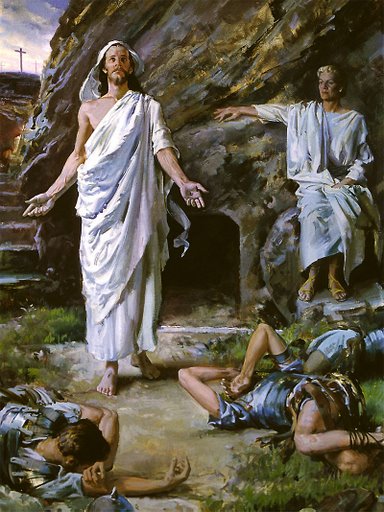
Jesus at the Tomb

Jesus at the Tomb

After Jesus’ death and resurrection, Jesus visited the disciples several times prior to His ascension into heaven. On one such occasion, He gave His disciples what many call the grand commission. The interesting part of this is that baptism is a very significant part of the grand commission and this in turn brings us back to the Laver once again. Let’s start by looking at the scripture.


Then the eleven disciples went away into Galilee, to the mountain which Jesus had appointed for them. When they saw Him, they worshiped Him; but some doubted. And Jesus came and spoke to them, saying, “All authority has been given to Me in heaven and on earth. Go therefore and make disciples of all the nations, baptizing them in the name of the Father and of the Son and of the Holy Spirit, teaching them to observe all things that I have commanded you; and lo, I am with you always, even to the end of the age.” Amen. (Matthew 28:16-20)


As stated in previous postings, the purpose of the Laver is to provide a place of cleansing prior to a priest entering into ministry. For example, the Tabernacle priests were required to purify themselves prior to entering into ministry inside the Holy Place (requiring a much closer relationship with God).
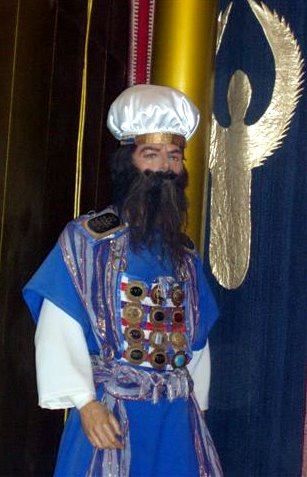
The Tabernacle High Priest

The Tabernacle High Priest


However, when we look closer at the cleansing process at the Laver we find that there is much more going on here that simply cleansing the body. What we find is that the priest would bend over the Laver and look into the water while washing. Since the inside surface of the Laver consisted of a highly polished brass, the priest was able to see his own reflection as he washed. Legend has it that the priest would see a reflection of how he appeared to God. This being the case, then the priest would have had to contemplate their readiness to enter into a closer relationship with God (in ministry in the Holy Place of God) based on what they saw. He certainly would now have the motivation necessary to initiate the permanent changes necessary to serve in a Godly ministry.


So this is one of the secrets revealed by the Laver. The symbolic cleansing of water represents a deeper more profound change in the character and nature of the person. It represents the change necessary to develop a closer relationship with Him. This change and closer relationship with God is required for effective ministry.

Water comes from the Holy Spirit at the Baptism of Jesus

Water comes from the Holy Spirit at the Baptism of Jesus


So if Jesus is our Laver, how is it that we can look into Him and see how we appear to Him? This is critical because successful ministry is dependent upon it.


Jesus is our Laver when we read scriptures pertaining to His words and deeds. When we do so we come to examine how our actions of love compare to those of our Lord. The words of Jesus are the vehicle through which we are empowered by the Holy Spirit to see ourselves as we truly are. His words convict us in our heart to change our nature. By reading about His life and His words, we become purified and are empowered by the Holy Spirit and to change. We are changed in body, mind, heart and spirit into a new creation[i]. We seek a deeper relationship with God and the desire for evil is removed from our nature.


Once this is discerned we are called to the grand commission, which is to bring all of this to the nations.

You can read addition posts about Jesus fulfilling the Lavers prophesy by following the links below:


Being-Born-Of-The-Spirit-And-The-Brazen-Laver

Jesus-Gives-The-Living-Water-Of-The-Laver


Lessons-From-Jesus-Our-Brazen-Laver

Jesus-The-Laver-Washes-His-Disciples-Feet

The-Baptism-Of-Jesus-And-The-Brazen-Laver

[i] 2 Corinthians 5:17  Therefore, if anyone is in Christ, he is a new creation; old things have passed away; behold, all things have become new. 


The Baptism of Jesus and the Brazen Laver

Our purpose here is to correlate the attributes, functions and purpose of the items found in the Tabernacle of Moses to the life and words of Jesus. In achieving this we build a case that Jesus is the fulfillment of the Tabernacles’ prophesies and therefore the Christ. In addition, as we learn more about the Tabernacle and how it foretells the coming of Jesus, we will find that we gain a better understanding of the heart of God and the nature of His love.

Our post today will take a look how the Baptism of Jesus fulfills one of the prophesies of the Brazen Laver. So let’s look deeper into the scriptures relating to the Brazen Laver prior to our look into the Baptism of Jesus. This information can be found by simply follow this link: The-Brazen-Laver.

The Baptism of Jesus

The ministry of John the Baptist was to make straight the path of the Lord who was to come.

Then they said to him, “Who are you, that we may give an answer to those who sent us? What do you say about yourself?” He said: “I am ‘The voice of one crying in the wilderness: “Make straight the way of the LORD,” ‘ as the prophet Isaiah said. (John 1:22 – 23)

john-the-baptist

John the Baptist


He preached repentance of sin and baptism in water for the remission of sin. John’s ministry led the people toward purity in preparation for their entering into a closer, more spiritual relationship with God.

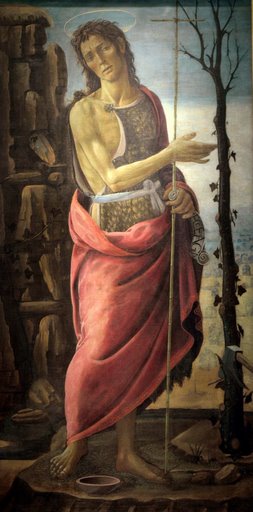
museum-of-fine-arts-budapest-2008-1554x3144

John the Baptist from the Museum of Fine Arts in Budapest


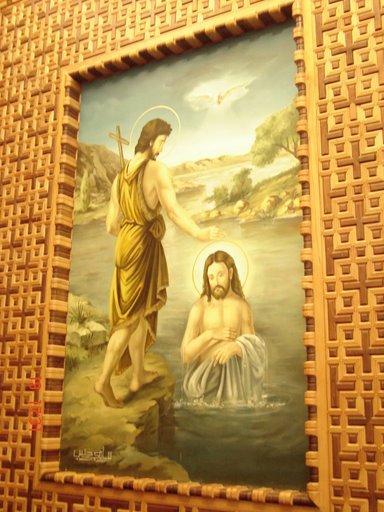
However, baptism was soon to take an entirely new form when Jesus came to John to be baptized. Although He was without sin[ii], Jesus was baptized by John in water to fulfill the model of the Brazen Laver that required purity through washing prior to entering ministry. The new form of baptism was introduced as Jesus came up from the water and the Holy Spirit descended upon Him in the form of a dove, thus signifying the ultimate form of purity. From that point forward Jesus was empowered by the Holy Spirit and therefore was ready for ministry.

john-baptizes-jesus

John the Baptist baptizes Jesus


In addition, He was then able to baptize others with the Holy Spirit, therein empowering them from on high. This enabled His disciples to minister with power and to have a deeper spiritual relationship with God. Let’s look at the scriptures that support these statements:

The beginning of the gospel of Jesus Christ, the Son of God. As it is written in the Prophets: “Behold, I send My messenger before Your face, Who will prepare Your way before You. The voice of one crying in the wilderness: ‘Prepare the way of the LORD; Make His paths straight.’“ John came baptizing in the wilderness and preaching a baptism of repentance for the remission of sins. Then all the land of Judea, and those from Jerusalem, went out to him and were all baptized by him in the Jordan River, confessing their sins. (Mark 1:1-5)

Like the priest washing at the Brazen Laver, John was preparing the people for entering into a closer relationship with God. The Father had sent His son, the living Tabernacle, to earth and now the Father was empowering Jesus to accomplish His mission on earth:

And he preached, saying, “There comes One after me who is mightier than I, whose sandal strap I am not worthy to stoop down and loose. I indeed baptized you with water, but He will baptize you with the Holy Spirit.” It came to pass in those days that Jesus came from Nazareth of Galilee, and was baptized by John in the Jordan. And immediately, coming up from the water, He saw the heavens parting and the Spirit descending upon Him like a dove. Then a voice came from heaven, “You are My beloved Son, in whom I am well pleased.” Immediately the Spirit drove Him into the wilderness. And He was there in the wilderness forty days, tempted by Satan, and was with the wild beasts; and the angels ministered to Him. (Mark 1:7-13)

luminious-mysteries-1

John Baptizes Jesus


So, the purification of the priests in water of the Laver is prophetic of the baptism of Christ Jesus, our high priest, in the Holy Spirit. We can conclude from this that repentance and baptism are very important components prior to entering into ministry. Water baptism is so important that our Lord Jesus came to be baptized by John. In doing so He gave us baptism as a model that to emulate. A model that when emulated will result in the baptism of the Holy Sprit.

The point in all of this is that weather you look at the old or the new covenant you will find that the cleansing of the minister is necessary prior to entering ministry. This was as true for Tabernacle priest who washed at the Laver, as it was for Jesus who was baptized in the Jordan by John. Therefore, it is true for any of us who seek to serve the Lord as well.

This purification is necessary for the development of an empowering relationship with God. For us it is the empowering of the Holy Spirit. We will learn more about the importance of this in subsequent postings.

You can read addition posts about Jesus fulfilling the Lavers prophesy by following the links below:

Being-Born-Of-The-Spirit-And-The-Brazen-Laver

Jesus-Gives-The-Living-Water-Of-The-Laver

True-Baptism-Reveled-In-The-Reflections-Of-The-Laver

Lessons-From-Jesus-Our-Brazen-Laver

Jesus-The-Laver-Washes-His-Disciples-Feet


[ii] Hebrews 4:15 For we do not have a High Priest who cannot sympathize with our weaknesses, but was in all points tempted as we are, yet without sin.


Jesus is the Way

We now plan to present an investigation into the significance of Jesus’ statement; “I am the Way, the Truth and the Life,” with our primary focus for this post to be on what Jesus meant when He said “I am the Way.”

lamb


Our strategy is to draw parallels to the Tabernacle Courtyard as the passage way into this chamber of the Tabernacle is also called “the Way.” So the Tabernacle Courtyard will become a starting point of our investigation as we will present its artifacts, attributes and purpose.

the-full-tabernacle


Once we have achieved an understanding of the Courtyard we will turn our attention to the parallels in the life of Jesus. We will demonstrate that His life and words reveal Him to be the Courtyards’ prophetic promise for the forgiveness of sin through Gods’ relationship of grace with man. With that said, let us move on to looking at the Tabernacle Courtyard.

The Courtyard is enclosed by a linen fence and a gate (called the Way) that provides entry into the Tabernacle. Three objects can be found in the Courtyard. They are the Altar of Burnt Offerings, the Brazen Laver and the Sanctuary tent.

Upon the Altar of Burnt Offerings animal and blood sacrifices were made for the forgiveness of sins. The Brazen Laver was used for cleansing by the priest after performing their duties in the Tabernacle Courtyard and prior to entering into the Sanctuary tent.

To learn about the Tabernacle Fence and Gate follow the link below:

The-Tabernacle-Fence-And-Gate

tabernacle-gate

To learn about the Altar of Burnt Offerings follow the link below:

The-Altar-Of-Burnt-Offerings

To learn about the Activities at the Altar of Burnt Offerings follow the link below:

The-Activities-At-The-Altar-Of-Burnt-Offerings

Next our attention will turn to looking for parallels in the life of Jesus, starting with the Altar of Burnt offerings. First we will look at Jesus being the sacrifice for our sins because He is the Lamb of God. Next we will look at Jesus from the standpoint of being the good shepherd as He gave His life on the cross for us.

To learn about Jesus the Lamb of God follow the link below:

tabernacle-courtyard


Jesus-Is-The-Lamb-Of-God

To learn about Jesus the Altar of Burnt Offerings follow the link below:

Jesus-Is-The-Altar-Of-Burnt-Offerings

To learn about Jesus the Good Shepherd follow the link below:

Jesus-Is-The-Good-Shepherd

p1010227

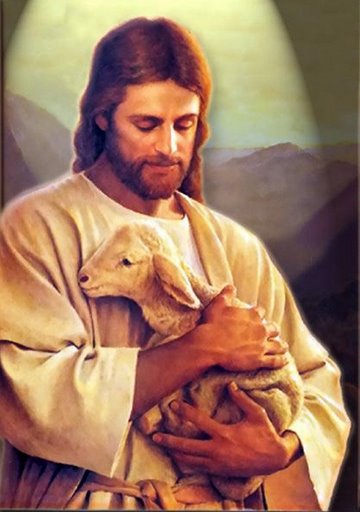
The Good Shepherd gave up His life for His sheep.

The Brazen Laver is another object found inside the Tabernacle Courtyard. It’s main purpose is to allow for the cleansing of the priest prior to ministry. The following link will take you to the post that describes the Tabernacles’ Laver:

The-Brazen-Laver

One of the ways that can claim that Jesus is the fulfillment of Tabernacle prophesies is by looking at the baptism of Jesus in the Jordan River. The following link will take you to this discussion.

The-Baptism-Of-Jesus-And-The-Brazen-Laver

john-baptizes-jesus


Jesus Is The Miracle Worker In Us

Jesus was asked if he was the Coming One by one of the disciples of John the Baptist. Here is how He responded:

Jesus answered and said to them, “Go and tell John the things which you hear and see: The blind see and the lame walk; the lepers are cleansed and the deaf hear; the dead are raised up and the poor have the gospel preached to them. And blessed is he who is not offended because of Me.” (Matthew 11:4-6)

Jesus came into this world to deliver a series of messages from the Father, and He proclaimed these messages by the power of the Holy Spirit. In addition, His words were reinforced by miraculous actions that demonstrate the truth of what He spoke. This we have seen through out our postings on this site.

In a like manner, we who follow in the footsteps of Jesus are also charged with the responsibility of communicating the words and thoughts that God places in our hearts and to do the things that He shows us to do. Therefore, when we do them we should also see our actions reinforced in miraculous ways by the power of the Holy Spirit.

This is what separates us from false doctrines, false profits, sham artists and all forms of false religions. Anyone can make a false claim or be seriously mistaken about the truth. Many intelligent people can study the Bible and preach the Word in front of thousands of people and move them emotionally. But Jesus empowers His followers with His spirit. So we then should walk just like Jesus did. In the case of Jesus the bottom line was and always will be; does God support the words and actions of His ministry with miracles? So then it should be with His followers. Just like it was with the apostles. We must ask ourselves if the people blessed by God after the delivery of our message? Are the hearts of the people changed to conform with God’s will? Has the impossible transpired? Are bodies healed, curses broken or the lost saved? Remember, those who believe in Jesus will do the things that He did, and greater that these will they do. So speak the things that God has given you in boldness and without fear. Know that God will support the things that He has given you to do. Also realize that it is up to you to speak the Word and to demonstrate faith by initiating action no matter how impossible the action may seem.

Also understand that God’s support often comes only when things are impossible to us to do or we give up on doing them. When we initiate an activity that we know is impossible and it gets done then there can be no doubt that it is God doing the work and as a result, getting the glory. The actions of Moses provide a good example of what we are discussing here.

Then Moses stretched out his hand over the sea; and the LORD caused the sea to go back by a strong east wind all that night, and made the sea into dry land, and the waters were divided. (Exodus 14:21)

Moses stretched out his hand in faith over the Red Sea, knowing full well that the Lord would support his action and part the Red Sea. In fact, if we look at the books written by Moses, we find that he stretched out his hand quite often in expectation of God action. Interestingly, these actions often resulted from a request from God. It is also interesting that God never took unilateral action but required Moses to initiate the activity. Time after time, Moses had to demonstrate faith in God by taking action in faith that God would do the impossible. So, Moses demonstrated faith with actions and God supported his actions with miracles.

This is exactly what we are to do. Set a direction that is based on God’s communication. Ignore the impossible and with absolute faith (without doubting) stretch out our arm and know with certainty that God will take action in support of what He has given us to do.


Applying The Attributes Of Jesus Our Table Of Showbread

In our previous posting we presented the correlation between the attributes of the Table of Showbread and the words and actions of Christ Jesus.

To summarize, the bread placed on the Table of Showbread represented the twelve tribes of Israel, and symbolically represented an offering of God’s people to God. The bread on the table suggested an intimate relationship with God, one in which the people would commune with God just as they did with their family over a meal. The Showbread would be displayed for seven days after which it would be replaced with fresh loaves. The removed bread would then be eaten by the priests who perceived it to be spiritual food.

We then correlated the above attributes of the Table of Showbread to the words and actions of Jesus. We used Jesus’ statement, “I Am the Bread of Life” as a key connection to the Table of Showbread. We then introduced the scriptures of the multiplication of the loaves and fish as a validation to His claim to be the Bread of Life. Next we introduced the scripture in which Jesus proclaimed that anyone who ate the Bread of Life would live forever. This statement was later validated when Jesus was raised from the dead and ascended into heaven. Therefore, the Bread of Life has the power to overcome death and live with God forever. Consequently, is it certainly a spiritual food, just like the loaves eaten by the Tabernacle priests were.

Applying the Principles of Jesus the Bread of Life

In the Lords prayer, it states that the Lord’s will be done, on earth as it is in heaven[i]. Therefore, lets do as our Lord Jesus has commanded us to do by eating His body and drinking His blood symbolically by partaking in the bread and wine as they did at the last supper.

And He took bread, gave thanks and broke it, and gave it to them, saying, “This is My body which is given for you; do this in remembrance of Me.” (Luke 22:19)

We should honor Jesus by doing as He requested in remembrance of Him. We should take His real body and real blood in the communion as He prescribed, eating the bread and drinking the wine of the new covenant, knowing that we are eating spiritual food, and knowing that we are taking Jesus into ourselves in the process.

More that this however, through this physical act we must seek to develop the spiritual body and blood of Jesus in ourselves. This is because our spiritual body needs both nutrition and exercise to properly develop, just as our physical bodies do. We can accomplish this by reading the words of Jesus, and making them a part of us. We can then use His words by asking the Holy Sprit to make them live in our hearts, so that the Word of God becomes a part of us. By doing this we will have achieved the communion with the Lord that was prophesized at the Table of Showbread. The body and blood of Jesus will have set us free[ii] and shown us the “Way” to God, the “Truth” about God and the path to “Life” with God forevermore. Lets us therefore seek Him will all of our heart, with all of our soul, with all of our mind, with all of our strength, and with all that we are.

In doing these things we come to Jesus, the Truth, who sets us free from the bondage of our sinful ways. Our journey through the Truth brings change into our lives:

till we all come to the unity of the faith and of the knowledge of the Son of God, to a perfect man, to the measure of the stature of the fullness of Christ; that we should no longer be children, tossed to and fro and carried about with every wind of doctrine, by the trickery of men, in the cunning craftiness of deceitful plotting, but, speaking the truth in love, may grow up in all things into Him who is the head; Christ; from whom the whole body, joined and knit together by what every joint supplies, according to the effective working by which every part does its share, causes growth of the body for the edifying of itself in love. This I say, therefore, and testify in the Lord, that you should no longer walk as the rest of the Gentiles walk, in the futility of their mind, having their understanding darkened, being alienated from the life of God, because of the ignorance that is in them, because of the blindness of their heart; who, being past feeling, have given themselves over to lewdness, to work all uncleanness with greediness. But you have not so learned Christ, if indeed you have heard Him and have been taught by Him, as the truth is in Jesus: that you put off, concerning your former conduct, the old man which grows corrupt according to the deceitful lusts, and be renewed in the spirit of your mind, and that you put on the new man which was created according to God, in true righteousness and holiness. Therefore, putting away lying, “Let each one of you speak truth with his neighbor, for we are members of one another. Be angry, and do not sin: do not let the sun go down on your wrath, nor give place to the devil. Let him who stole steal no longer, but rather let him labor, working with his hands what is good, that he may have something to give him who has need. Let no corrupt word proceed out of your mouth, but what is good for necessary edification, that it may impart grace to the hearers. And do not grieve the Holy Spirit of God, by whom you were sealed for the day of redemption. Let all bitterness, wrath, anger, clamor, and evil speaking be put away from you, with all malice. And be kind to one another, tenderhearted, forgiving one another, just as God in Christ forgave you. Therefore be imitators of God as dear children.” (Ephesians 4:13, 5-1)

So, we as imitators of God seek to become more like Jesus who is the Bread of Life, our Table of Showbread, in the following ways:

Eat the Body and Blood of Jesus

Eat the body and blood of Jesus in the way that our Lord prescribed at the last supper. Remember that His body is food indeed and His blood is blood in deed. Also eat the body and blood of Jesus spiritually, by absorbing the scriptures about Jesus into you heart.

Seek a Spiritual Relationship with Jesus

Seek Jesus in your prayer time and He will be manifest to you through the presence of the Holy Spirit. The Holy Spirit will enlighten you in all things so take the time to listen for His voice. Also remember to listen for the Lord’s voice and His knocking at your door.

Behold, I stand at the door and knock. If anyone hears My voice and opens the door, I will come in to him and dine with him, and he with Me. (Revelation 3:20)

It is only when we open the door called “The Truth” that we can honestly eat the Bread of Life.

Become the Bread of Life for Others

As we eat the Bread of Life and grow in the Lord we will be led to say and do the things that Jesus did. As our overall behavior changes, others will be able to see the goodness of Life that is in us. By the power of the Holy Spirit the intent of the Father will come through us and be deposited in others around us. We therefore are agents of Jesus who are carrying on His mission until His return at the second coming.

In our next post we will introduce the Golden Lampstand. If you have any questions please make a comment. I look forward to hearing from you.

May the peace of our Lord Jesus Christ be will all of you.

Joe Gordon


[i] Matthew6:9-11 In this manner, therefore, pray: Our Father in heaven, Hallowed be Your name. Your kingdom come. Your will be done On earth as it is in heaven. Give us this day our daily bread.

[ii] John 8:35 And a slave does not abide in the house forever, but a son abides forever. “Therefore if the Son makes you free, you shall be free indeed.


Read my amazing true life story about how the forces of good and evil battle for my life and the vision that God has given me. My book, “Possess the Vision,” communicates my supernatural experiences and as a result, provides insight into the realm of the spiritual warfare that is raging for our souls and our purpose. This is a must read for all Christians. Learn more by following this link: Possess-the-Vision-at-Amazon

Entering The Truth Of The Tabernacle

The Tabernacle Courtyard

The Tabernacle Courtyard


In our previous postings we have communicated how the Tabernacle Courtyard is prophetic of Jesus Christ. The Courtyard foretells the blood sacrifice required of Jesus as payment for our sins on the cross. It also communicates that we must look at ourselves in light of the prefect model of Jesus. We must compare our actions and words to His since He is the Son of God and led a perfect life. In doing these things we enter into a relationship of grace with God. This fundamental relationship with God prepares us for a closer and more intimate relationship with Him. It prepares us for a relationship of empowerment, which is presented below in the section entitled “Jesus is the Truth.”


The Tabernacle Courtyard

The Tabernacle Courtyard


Our immediate objective is to present a review of the material that covers the Tabernacle as it pertains to the prophesy of Jesus Christ. We start with one of the most famous statements of Jesus, “I am the Way, the Truth and the Life.”  

The Way the Truth and the Life


The foundation for all of the work we will present on this subject is based upon the, “I am the Way, the Truth and the Life,” statement made by Jesus. What we have discovered is that these names, (the way, the truth and the life), are the names used to identify the entry ways into the Tabernacle chambers. “The Way,” for example is the name of the gate that leads into the Tabernacle Courtyard. “The Truth” is the name of the door into the Holy Place, and in like manner, “the Life,” is the passage into the Most Holy place of God. For a more detailed explanation of all of this please follow this link Jesus-is-the-Way-the-Truth-and-the-Life.


The Tabernacle Gate

The Tabernacle Gate


Another part of the work covered to date is that the Tabernacle is the place where God promised to dwell with His people in accordance with the covenant He made with them. Given that the chambers of the Tabernacle must be entered in sequence, what we have uncovered is that a progressively closer relationship with God is achieved as each new chamber is entered. So for example, the Tabernacle Courtyard is the chamber where a relationship of grace (forgiveness of sin) is achieved. The Holy Place brings us to a relationship of enlightenment (purpose and path) and empowerment (spiritual warfare), while the Most Holy place offers a relationship of covenant (dwelling under the protection of God).


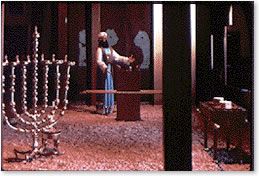
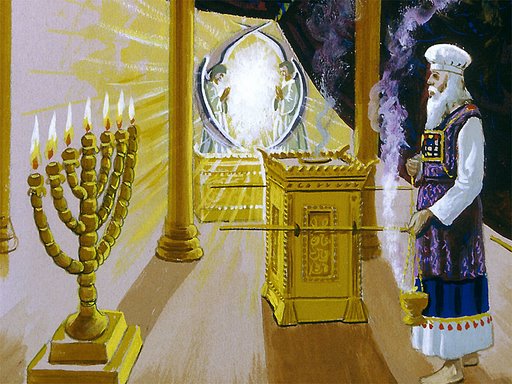
Priest in the Holy Place of the Tabernacle

Priest in the Holy Place of the Tabernacle


To date our investigation of the Tabernacle has been limited to looking at the Courtyard, the first of the three chambers of the Tabernacle. As a part of this investigation we have presented the objects found in the Courtyard, identified their purpose and attributes and then correlated them to the words and deeds of Jesus. So, for example, we found that grace is achieved in the Courtyard by way of blood sacrifice, in which a Lamb is slaughtered and then burned on the Brazen Alter (see details at Jesus-the-Brazen-Laver.) We can then associate Jesus, the “Lamb of God,” to this object by correlating it to the sacrifice and death of Jesus on the cross. This sacrifice of Jesus was required for the forgiveness of our sins. We conclude form all of this that Jesus is the fulfillment of the Brazen Altars prophesy and the entire Courtyard of the Tabernacle for that matter. This association between Jesus and the Tabernacle Courtyard should also help us to better understand what Jesus meant when He said “I am The Way.” Jesus meant that He is the way toward a relationship of grace. For more information about this please click on the following links to Jesus-is-the-Way and Becoming-like-Jesus-the-Way.


Jesus on the Cross

Jesus on the Cross


Our investigation of the Courtyard is also presented an examination of the Brazen Laver, which is the other object found in the Tabernacle Courtyard (for more details go to Jesus-the-Brazen-Laver.) The Laver is a water basin used for purification prior to entering the next chamber (the Holy Place), which represented a much closer relationship with God. The process of washing at the Laver required the priest to bend over it and as he did, he would be able to see his own reflection in its polished surface. The priests believed that when they looked into the Laver, that they saw themselves as God saw them. As a result their hidden faults were uncovered and they earnestly contemplated their worthiness to enter into a closer relationship with God in the Holy Place. This reflection resulted in a change in heart, which is necessary to enter into the Holy Place.


The Brazen Laver In Front Of The Holy Place


We then connected the function and attributes of the Laver with the life and words of Jesus. We used the baptism of Jesus in the Jordan as a fulfillment of prophesy of the Laver (for more information go to the-Laver-and-the-Holy-Spirit-of-Jesus.) We also saw how the washing of His disciple’s feet became a reflection of their readiness to enter into His ministry. In general we conclude that all of the words and deeds of Jesus are occasions for reflection and opportunities for change in preparation for ministry. Therefore our reading of scriptures that contain the words and deeds of Jesus are opportunities for reflection about our nature and how we stack up to in comparison to Jesus, our model of perfection. These occasions are opportunities to conform our heart and mind to Him as we pursue a more intimate relationship with God. For more detailed information about this click on the following link Applying-the-attributes-of-Jesus-our-Laver. 


So, by passing through “the Way” and into the Tabernacle Courtyard we find that our sins are forgiven and that our nature is changed as we seek to move into a deeper relationship with the Lord in the Holy Place. In a like manner we find that by passing through Jesus that our sins are forgiven and our nature is changed as we read His word and seek to become like Him. When this metamorphosis is complete we become ready to move to the next level by entering the passageway called “The Truth.”


The Truth leads us into the Holy Place of God where our pathway with the Lord is enlightened, our relationship with the Father is established and we become empowered for spiritual warfare. We are ready to provide a deeper assessment of, “Jesus the Truth.”  

Jesus is “The Truth”


We are now about to pass through the second door of the Tabernacle, the one called “the Truth”, that leads us into the Holy Place of God. To see a diagram of the Tabernacle chambers we encourage you to go to the following web page now and then return once you have viewed it (or open it in a separate browser so that you can read along while also looking at the picture): 


Diagram of the Tabernacle, Basic Layout of the Moses tabernacle  


In order to get a big picture view of where we are headed in the over all scheme of things we start with a review: 


When we look into the structure of the Tabernacle (like in the diagram above) we find that it has three major chambers. As we pass through the door of each successive chamber we find that God is presenting us with an expanded, more intimate relationship with Him.  


We have already discussed the Way and the Courtyard above. We have identified that it presents us with a relationship of grace and is a place of reflection and change. When Jesus claimed to be the Way, He is claiming to be the door that we must pass through to achieve to a relationship of grace.  


Our presentation of, “Jesus the Truth,” address the Holy Place of the Tabernacle and we plan to demonstrate that it is a place to achieve a relationship of empowerment. The passageway to the Holy Place is called “the Truth,” and so when Jesus claims to be “the Truth,” He is claiming to be the passageway to a relationship of empowerment.  


In subsequent postings we will plan to present the Most Holy place and in doing so, we plan to present a case that proves that a relationship of covenant is possible for us there. The veil to the Most Holy place is called “the Life”, so when Jesus claims to be the Life, He is claiming to be the veil to the Most Holy Place and a relationship of covenant with God.


The Priest in the Most Holy Place of the Tabernacle

The Priest in the Most Holy Place of the Tabernacle


The relationship between the Tabernacle and Jesus is that Jesus claimed to be “the Way, the Truth and the Life” and the doors of the Tabernacle chambers are called, “the way, the truth and the life.” Therefore, if Jesus is the Christ, we will find the same attributes and functions in the life of Jesus as we do in the Tabernacle. We will find that understanding the Tabernacle will also help us to better understand the nature of Jesus such that we can better emulate His life. All of this will help us to move into a closer relationship with God and do the work that He gave us to do on this earth. So, with this brief review in place let up proceed by looking at the physical properties of the Holy Place of the Tabernacle. 

Describing the Holy Place


The Holy Place is found inside the sanctuary tent that is found in the center of the Courtyard. The door to the tent is a curtain that is called, “The Truth.” By passing through the Truth one enters a room called, “The Holy Place.”  


Prior to entering into the Holy Place it is necessary to first pass through the Courtyard and the Way (reference the diagram). The reason for this is that purity must be achieved prior to entering into ministry in God’s Holy place. Entry into the Holy Place is the exclusive privilege of the priest, as no others are allowed inside. Therefore, God expects our purity to be achieved in the Courtyard. Our sins must be forgiven and our sinful nature addressed.  


Like the other compartments of the Tabernacle, the sanctuary was designed by God who passed the specifications directly to His servant Moses:  


And let them make Me a sanctuary, that I may dwell among them. According to all that I show you, that is, the pattern of the tabernacle and the pattern of all its furnishings, just so you shall make it. (Exodus 25:8-9)


As a result the sanctuary is both very practical and at the same time, very prophetic of the coming Christ.  


The Holy Place uses the east 30 feet of the sanctuary tent and contains three significant objects. It contains the Table of Showbread on the north side;

The Table of Showbread

The Table of Showbread

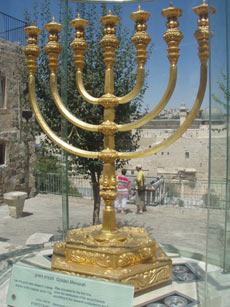
the Golden Lampstand on the south side;

The Golden Lampstand which was present in old temple but damaged, was restored to its original form, kept outside the temple area.

The Golden Lampstand which was present in old temple but damaged, was restored to its original form, kept outside the temple area.

and the Altar of Incense on the west side.

The Golden Altar is directly in front of the Most Holy Place

The Golden Altar is directly in front of the Most Holy Place

It should also be noted that the Golden Altar of Incense is placed directly in front of the vale (entrance) to the Most Holy Place. From this location a priest ministering at the Golden Altar can view the Ark of the Covenant and the Mercy Seat by simply looking through the semi-transparent vale. We will cover all of this later when we present the section called The Life. For now we will proceed to address the objects found in the Holy Place. 


One major difference between the objects found in the Holy Place and Courtyard is that all the objects in the Holy place are made of gold, while all the objects in the Courtyard are made of brass. This is significant because one who stands in the Holy Place is in a more favored relationship with God than one who is in the Courtyard. The gold used in the Holy Place signifies the special presence of God. When we look at the uses of the word “gold” in the bible we find that gold was used to symbolize God’s Word, the wisdom of God, the knowledge that emanates from God, the living favor of God, and truth. All of these attributes are to be associated with the Holy Place and with Christ Jesus as well. 

Our next posting will address the details of the Table of Showbread, the Golden Lampstand and the Alter of Burnt Offerings.

Read my amazing true life story about how the forces of good and evil battle for my life and the vision that God has given me. My book, “Possess the Vision,” communicates my supernatural experiences and as a result, provides insight into the realm of the spiritual warfare that is raging for our souls and our purpose. This is a must read for all Christians. Learn more by following this link: Possess-the-Vision-at-Amazon


If you are a new visitor to our site you will find that we are in the midst of a search to understand, find and become more like Jesus. New readers may find it helpful to read or browse the past postings, as there are several instances where current material is build upon prior postings. These postings can be found in the right hand column of the web page, in the box entitled “PAGES”, starting with the topic of “Seeking Jesus”. With that said we will present our current material.


In this section we will look for evidence of Jesus performing the services offered at the Brazen Laver. We will also explore the lessons that we can apply to our own lives that flow from our analysis of this topic.

Jesus Washes the Feet of His Disciples

Jesus, knowing that the Father had given all things into His hands, and that He had come from God and was going to God, rose from supper and laid aside His garments, took a towel and girded Himself. After that, He poured water into a basin and began to wash the disciples’ feet, and to wipe them with the towel with which He was girded. Then He came to Simon Peter. And Peter said to Him, “Lord, are You washing my feet?” Jesus answered and said to him, “What I am doing you do not understand now, but you will know after this.” Peter said to Him, “You shall never wash my feet!” Jesus answered him, “If I do not wash you, you have no part with Me.” Simon Peter said to Him, “Lord, not my feet only, but also my hands and my head!” Jesus said to him, “He who is bathed needs only to wash his feet, but is completely clean”; So when He had washed their feet, taken His garments, and sat down again, He said to them, “Do you know what I have done to you? You call me Teacher and Lord, and you say well, for so I am. If I then, your Lord and Teacher, have washed your feet, you also ought to wash one another’s feet. For I have given you an example, that you should do as I have done to you. Most assuredly, I say to you, a servant is not greater than his master; nor is he who is sent greater than he who sent him. If you know these things, blessed are you if you do them. I do not speak concerning all of you. I know whom I have chosen; but that the Scripture may be fulfilled, ‘He who eats bread with Me has lifted up his heel against Me.’ Now I tell you before it comes, that when it does come to pass, you may believe that I am He. Most assuredly, I say to you, he who receives whomever I send receives Me; and he who receives Me receives Him who sent Me.” (John 13:3-20)

Jesus clearly communicates several key points in washing His disciple’s feet. First of all, He communicates that each disciple should strive for purity in their life and their walk with God. For example, in the above passage Jesus tells Peter, “And you are clean, but not all of you.” For He knew who would betray Him; therefore He said, “You are not all clean.” This is in obvious reference to Judas who allowed the devil to enter the desire to betray Jesus[i] into his heart. The implication here is that the cleansing of Peter’s feet was necessary because he had walked with Judas, the son of perdition[ii], as a brother in ministry.

A lesson to be learned here is to be careful about who we walk with in ministry. If we walk with evil then how can our feet be clean? In addition, this lesson is symbolic of the transformation that the disciples would soon undertake in being baptized by the Holy Spirit. Therefore, the washing of their feet prepared them by washing away this worldly life in preparation for entering a life in the spirit.

In addition, Jesus tells Peter, “If I do not wash you, you have no part with Me.” This is a direct correlation to the purification at the Laver, where it was also a requirement to enter a deeper relationship with God. Secondly, we should model our life after the life of Jesus. In perfecting our walk with God we should look at the life of Jesus as the model of perfection to which we aspire. Reflecting on our own actions and, in turn, comparing them to His actions results in the ability to see ourselves for what we are. If this is the case in our life then we can be expected to wash the feet of those who walk in ministry with Jesus.

Thirdly, the washing of feet is symbolic of the baptism of the Holy Spirit, which in turn, is preparation for the ministry of the priesthood. Jesus was preparing His disciples for priesthood at the Last Supper. His instructions were clear that they were to go and wait for the helper, the Holy Spirit. Here is what happened:

And being assembled together with them, He commanded them not to depart from Jerusalem, but to wait for the Promise of the Father, which, He said, “You have heard from Me; for John truly baptized with water, but you shall be baptized with the Holy Spirit not many days from now.” (Acts 1:4 – 5)

In addition, the following scripture that confirms this prophesy of Jesus:

When the Day of Pentecost had fully come, they were all with one accord in one place. And suddenly there came a sound from heaven, as of a rushing mighty wind, and it filled the whole house where they were sitting. Then there appeared to them divided tongues, as of fire, and one sat upon each of them. And they were all filled with the Holy Spirit and began to speak with other tongues, as the Spirit gave them utterance. And there were dwelling in Jerusalem Jews, devout men, from every nation under heaven. And when this sound occurred, the multitude came together, and was confused, because everyone heard them speak in his own language. Then they were all amazed and marveled, saying to one another, Look, are not all these who speak Galileans? And how is it that we hear, each in our own language in which we were born? Parthians and Medes and Elamites, those dwelling in Mesopotamia, Judea and Cappadocia, Pontus and Asia, Phrygia and Pamphylia, Egypt and the parts of Libya adjoining Cyrene, visitors from Rome, both Jews and proselytes, Cretans and Arabs; we hear them speaking in our own tongues the wonderful works of God. So they were all amazed and perplexed, saying to one another, “Whatever could this mean?” (Acts 2:1 – 12)

Look at Jesus to Clearly see Yourself

From this example of Jesus washing the feet of His disciples we can extrapolate the following principle: Only by looking at and focusing on the life of Jesus can we see ourselves accurately. Looking directly into the life and actions of Jesus is like looking into a spiritual mirror that reflects our true image. In other words, we see ourselves as God sees us. Is this not what happened when Jesus washed the feet of His disciples? They watched as Jesus lowered Himself culturally to the status of a slave in washing their feet. The result was that their self-image was changed in the process. They realized that they had to deal with some serious imperfections. They were able to truly see their faults, perhaps for the first time. They saw themselves not with the eyes of the world but rather, with the eyes of God. They, therefore, knew that they would have to change their heart and their behavior to be able to achieve what God wanted in the ministry of Jesus Christ.

As we will learn in the next section, Jesus said: “I am the light of the world. He who follows Me shall not walk in darkness, but have the light of life.” His words and actions reveal the truth that was sent down from the Father in heaven. In this respect, looking at the life of Jesus is like looking into a mirror in perfectly clear light. It enables us to clearly see even our most minor faults. It is in this way that Jesus is our modern day Brazen Laver.


[i] John 13:2 And supper being ended, the devil having already put it into the heart of Judas Iscariot, Simon’s son, to betray Him,

[ii] John 17:12 While I was with them in the world, I kept them in Your name. Those whom You gave Me I have kept; and none of them is lost except the son of perdition, that the Scripture might be fulfilled.